
TRIP OF 4 days
FROM1.985€/PERSON
The common thread of this cultural getaway to Florence will be Broken. Il potere del frammento, the major exhibition at Palazzo Strozzi bringing together more than eighty works spanning five millennia and five continents. Because a fragment is never just the part of something that has been lost: it can be a trace, a memory, a promise of reconstruction.
This journey goes much further. We will explore the Medici collections at the Uffizi Gallery, walk above the Arno through the Vasari Corridor, stand before the sculpture of Donatello and Michelangelo at the Bargello and the Medici Chapels, and end at the Brancacci Chapel, where Renaissance painting took its very first steps. Four days to discover Florence alla maniera di Tempodart: with time to contemplate it, understand it and enjoy it.
REQUEST FREE INFORMATION
Summary: Direct flight from Barcelona and welcome lunch. In the afternoon, a first walk through the heart of Florence: Piazza della Signoria and Palazzo Vecchio, Piazza della Repubblica, the Duomo with Brunelleschi's dome and, to close the day, the basilica of Santa Maria Novella.
Details: In the morning we will take the scheduled Vueling flight from Barcelona to Florence, departing at 10:45 and arriving at 12:35. On arrival, transfer to the Hotel Helvetia & Bristol*****, check-in and welcome lunch.
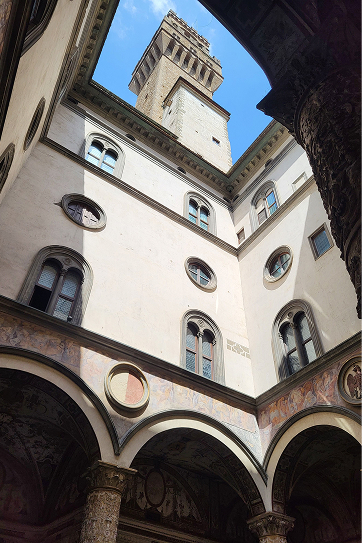
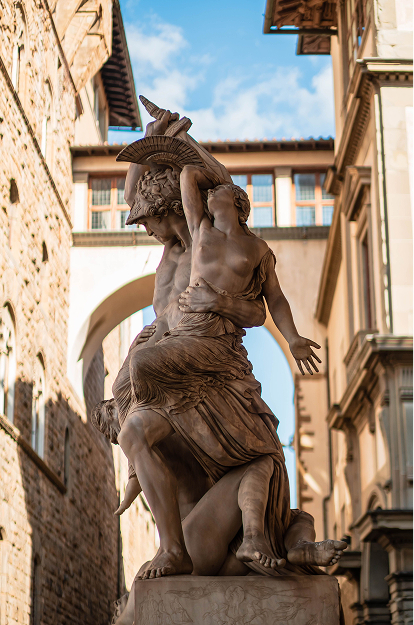
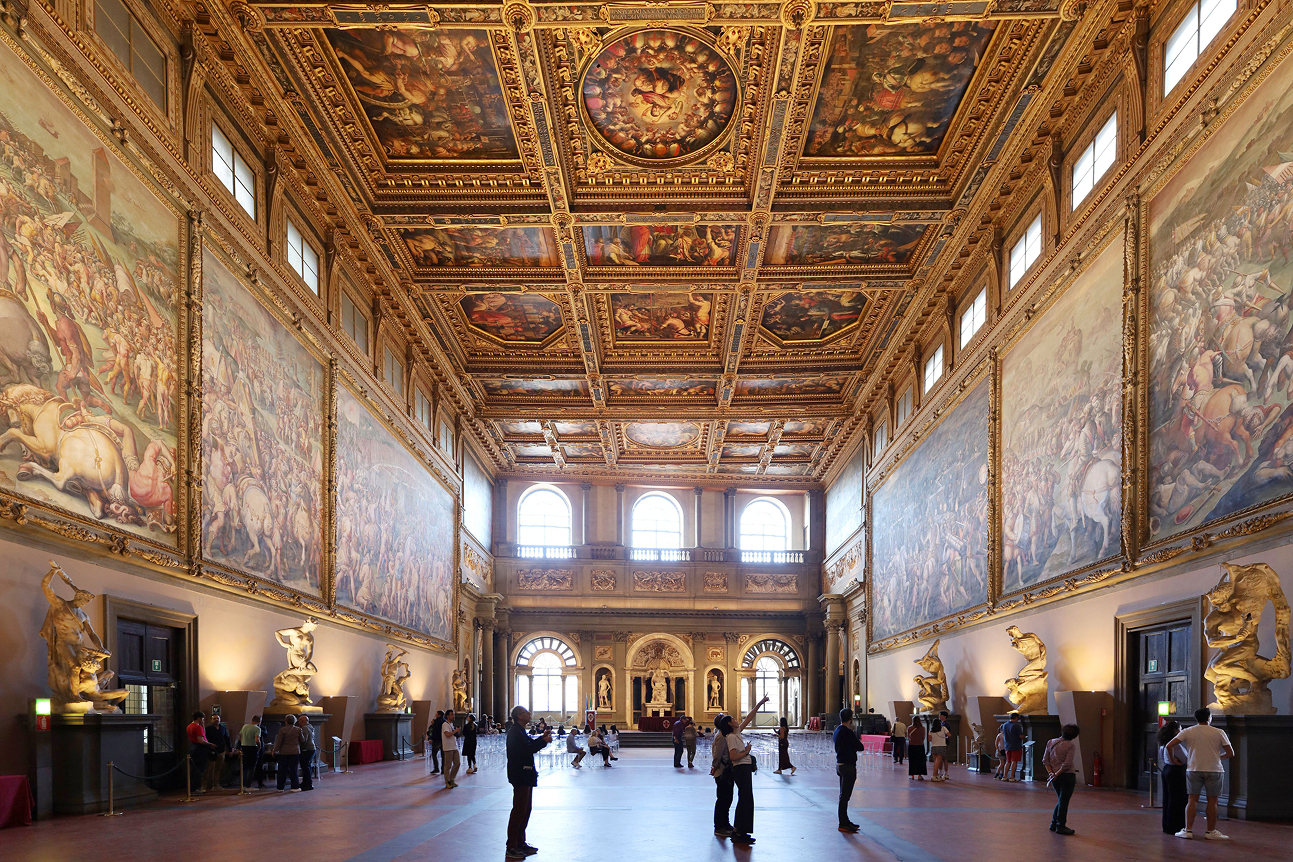
In the afternoon we will take our first walk through the heart of the city. We will begin at Piazza della Signoria, for centuries the great stage of Florentine political life. In front of Palazzo Vecchio, the former seat of the Republic's government, stand sculptures that speak of freedom, ambition and power: the copy of Michelangelo's David, Benvenuto Cellini's Perseus holding up the head of Medusa, and Giambologna's breathtaking Rape of the Sabine Women.
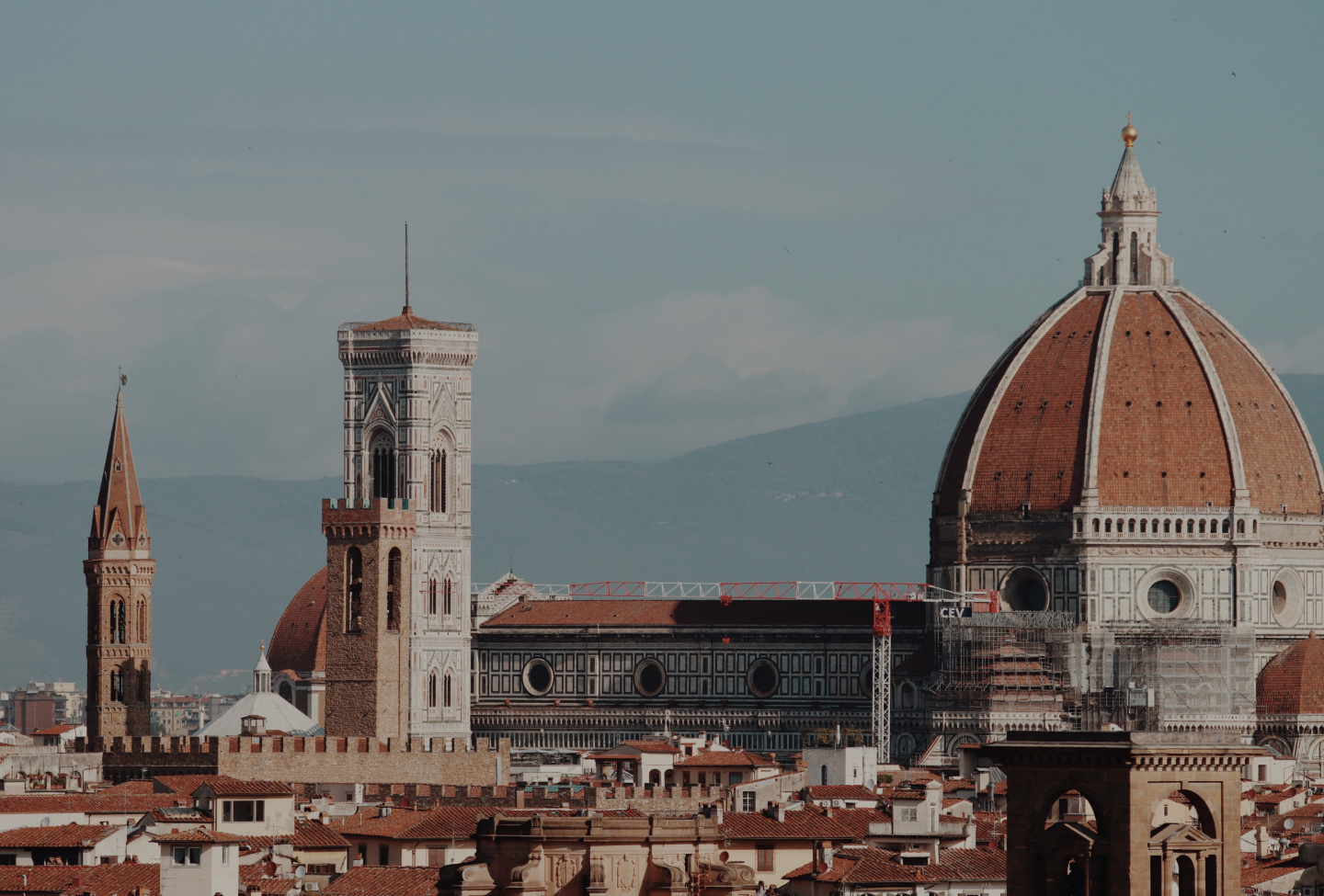
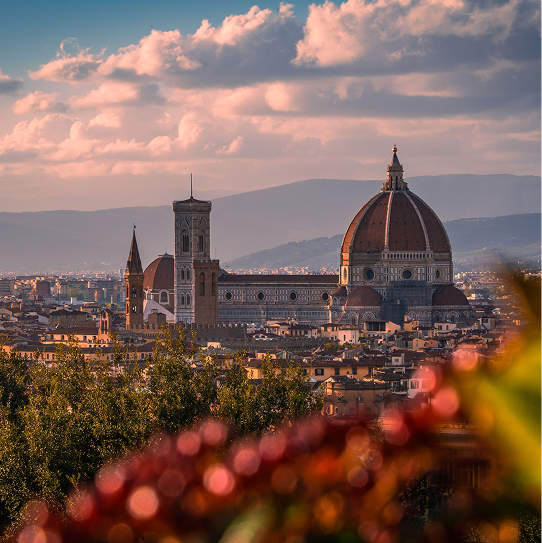
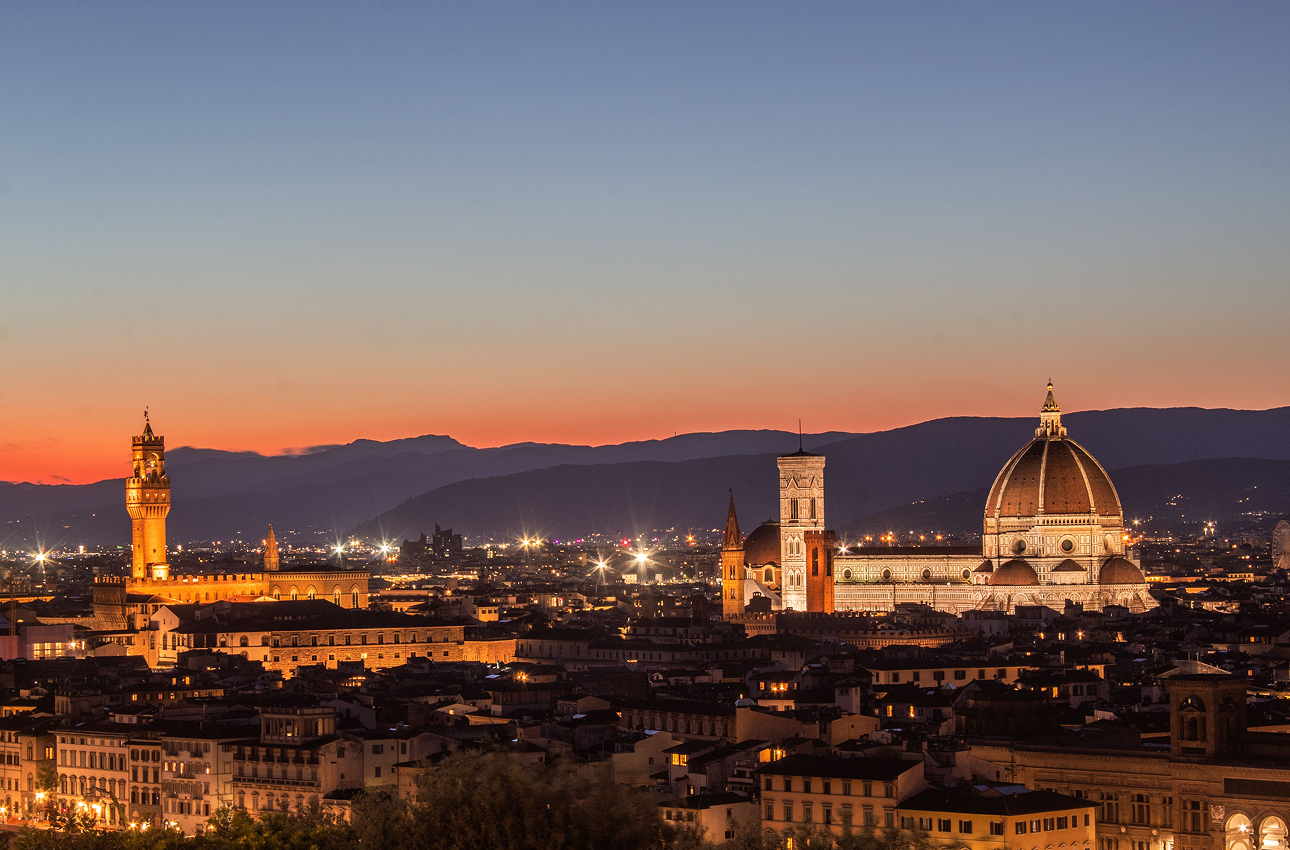
We will continue through Piazza della Repubblica to the Duomo, Santa Maria del Fiore, whose dome designed by Brunelleschi is one of the great architectural miracles of the Renaissance. We will let ourselves be captivated by its façade of white, green and pink marble, the expression of a city that turned art and beauty into a statement of its power and its faith.
We will end the day at the basilica of Santa Maria Novella, one of the most important churches in Florence, home to treasures of Western art by Masaccio, Giotto and Botticelli, including Masaccio's Holy Trinity and Giotto's Crucifix. Here we will begin to read Florence as a palimpsest of eras, styles and memories.
The first day ends with the feeling of having entered Florence through the main door: that of its public life, its faith and its ambition.
Summary: A day devoted to the sculpture and painting that changed the history of art. In the morning, the Bargello Museum with Donatello and the young Michelangelo, followed by the New Sacristy of the Medici Chapels. In the afternoon, an unhurried visit to the Uffizi Gallery, from Giotto to Botticelli and Leonardo, culminating in a walk through the Vasari Corridor above the Ponte Vecchio.
Details: After breakfast we will begin at the Bargello Museum, one of the most impressive medieval buildings in Florence. Built in the mid-13th century as the seat of civic power, it later became the residence of the Podestà, a barracks and a prison, and its courtyard was the scene of public executions. A building that was a fortress, a court and a prison, and ended up safeguarding beauty, is in itself a story of transformation. Today it is the great museum of Renaissance sculpture.
Donatello will be the first great protagonist of the visit. In the hall dedicated to him stands his bronze David, the first freestanding male nude since Antiquity: a serene, almost self-absorbed young man with Goliath's head at his feet, who sums up the daring of the early Renaissance. Beside it, the Saint George and other works that show how Donatello gave sculpture back its body, gesture and emotion.
The other great protagonist will be the young Michelangelo. Here we find his Bacchus, one of his first major works, carved in Rome when he was not yet twenty-five; the Pitti Tondo, a delicate and deliberately unfinished relief; and the bust of Brutus, also left incomplete. In these works the non finito turns incompleteness into expression, and they fit perfectly with the thread of our journey: the fragment as a force, the unfinished as a possibility of endless transformation and a reflection of the Neoplatonic philosophy that flourished in Florence in those years. We will visit the Bargello without hurry, with an official guide who will help us read each work and discover how they speak to one another.
We will continue to the Medici Chapels, next to the basilica of San Lorenzo. At Tempodart we believe no one should visit Florence without stepping into one of the most intense spaces of the Renaissance: Michelangelo's New Sacristy. The Medici, bankers and patrons turned princes, wished to leave their memory here. Commissioned from Michelangelo in the 1520s, it is a space where the artist was at once architect, sculptor and poet of grief.
The tombs of Giuliano and Lorenzo de' Medici are presided over by the allegories of Day and Night, Dawn and Dusk: bodies that seem overcome by time, suspended between sleep and awakening. The chapel remained unfinished when Michelangelo left Florence, and that incompleteness is part of its power.
The contrast comes with the Chapel of the Princes, a vast octagonal space clad in pietra dura and marble for the tombs of the grand dukes: power, wealth and ambition. Two ways of thinking about memory: one that proclaims it with gold and stone, and another that suggests it with a single fading figure.
After a lunch break we will reach the Uffizi Gallery. A building made to govern, turned into a museum. Its galleries were built from 1560 onwards, commissioned by Cosimo I de' Medici and designed by Giorgio Vasari. The name says it all: uffizi means "offices", the place where power was organized. The Medici gradually filled its upper floors with paintings, sculptures and curiosities, and the collection became one of Europe's great treasures. Thanks to the pact signed in 1737 by the last of the Medici, Anna Maria Luisa, those works could never leave Florence. That decision explains why we can admire them here today.
We will follow a route from the Gothic to the Renaissance, room by room. Giotto, Cimabue and Duccio show us how painting began to see in a new way. Then comes the great Florentine moment: Botticelli's Primavera and Birth of Venus, Leonardo's Annunciation, Michelangelo's Doni Tondo, Piero della Francesca, Uccello and Raphael. And further on, Titian, Caravaggio and the painting that carried the Italian legacy forward. A journey through the history of a visual way of thinking that changed the world.
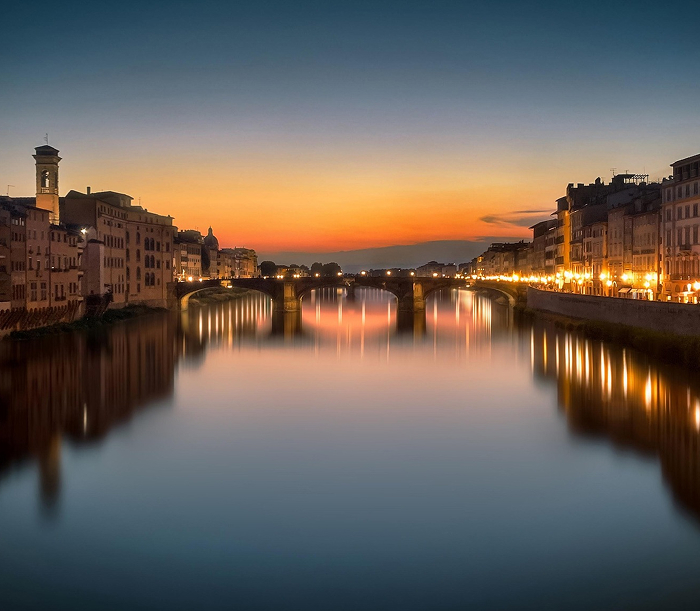
The highlight of the day will be walking through the Vasari Corridor. Vasari built it in 1565 so that the Medici could move discreetly from Palazzo Vecchio to Palazzo Pitti, passing through the Uffizi and crossing the Arno above the Ponte Vecchio. A walk suspended above the city: a passageway of power that today becomes part of our route.
Rest of the afternoon at leisure and overnight at the hotel.

Summary: Today we reach the heart of this signature journey to Florence: a guided visit for our group to Broken. Il potere del frammento at Palazzo Strozzi. In the afternoon, the Galleria dell'Accademia, with Michelangelo's Prisoners and David. We will end the day with a farewell dinner at a historic restaurant in the city center.
Details: We will spend the morning on a guided visit for our group to the exhibition that gives this journey its title: Broken. Il potere del frammento, at Palazzo Strozzi. Ancient art and contemporary creation enter into dialogue to show how ruins and incompleteness can become a starting point. The exhibition brings together more than eighty works and objects on loan from museums such as the Metropolitan Museum in New York, the Louvre and the British Museum, as well as the National Museum of Anthropology in Mexico City. Five millennia and five continents: from ancient Egypt and classical Greece to the cultures of Mexico and Cambodia, and on to Michelangelo, Canova, Rodin, Louise Bourgeois and the artists of today.
The question running through every room is simple and dizzying: what happens to a work of art when it breaks? Here the fragment is not a mere remnant of something lost, but an object with a voice of its own. The nose and lips of Akhenaten, more than three thousand years old, can tell us more than a complete portrait. Rodin's Abattis (hands, arms and legs in white plaster) remind us that the sculptor found in the fragmented body a form of modern beauty. Canova's heads, wounded by the bombings of the First World War, bear in their scars the mark of the 20th century. Some pieces were broken by the passage of time, others by wars, revolutions or natural disasters such as the 1966 Florence flood, and others were broken on purpose by the artists themselves.
An exquisitely crafted exhibition design, with intense colors (burgundy, deep blue and forest green) and perspectives that isolate each piece and invite us to look closely at every detail. It is an exhibition to be walked through in a hushed voice, almost like an archaeological site from which only the essential has been saved. On the way out, the Renaissance courtyard of Palazzo Strozzi hosts an installation by Dutch artist Mark Manders, conceived as a "temporary open-air studio".
After a lunch break we will continue to the Galleria dell'Accademia, founded in the 18th century alongside the city's art academy so that students could study the great masters up close. Today its great hall is one of the most moving scenes in Western art.
A special moment will be seeing Michelangelo's Prisoners up close: stone struggling to be born. Four figures intended for the tomb of Pope Julius II half-emerge from unfinished blocks of marble. Twisting torsos, faces not yet defined, muscles that seem to push the stone from within. They are the non finito in its purest form: before them we understand that the unfinished can also be a form of truth.
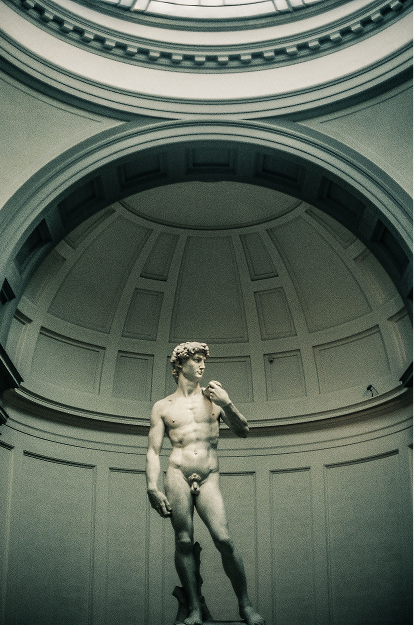
And finally, the David. Beneath a dome of light, the giant appears. Michelangelo carved it between 1501 and 1504 (he was barely twenty-six when he began) from a block of marble that other sculptors had abandoned as impossible. For centuries it stood in Piazza della Signoria, and since 1873 it has been kept here for its protection. Up close it has the tension of someone about to act: the veins of the hand, the gaze fixed on the adversary, the weight of the body already in motion. It is the complete work in front of which we will have talked so much about the fragment, and perhaps that very conversation will allow us to see it with new eyes.
We will end the day with a farewell dinner at one of the historic restaurants in the center of Florence, to toast the journey and enjoy Tuscan cuisine.
Summary: A final day devoted to the Oltrarno, the most authentic district of Florence, with Brunelleschi's church of Santo Spirito and its crucifix attributed to the young Michelangelo, and Masaccio's Brancacci Chapel, where Renaissance painting was born. Free time and return flight to Barcelona.
Details: On our last day we will explore one of the most interesting and authentic districts of the city: the Oltrarno. Far from the bustle of the great monuments, its streets invite us to discover another Florence: that of old artisan workshops, Renaissance palaces, small squares and façades that hold centuries of history in their stones. Traditionally linked to goldsmiths, restorers and artistic crafts, the district keeps alive the spirit of a hard-working, creative Florence.
Here we will visit the church of Santo Spirito, one of the great works of Filippo Brunelleschi and one of the most elegant expressions of the Renaissance architectural ideal. Designed in the 15th century, it follows an almost musical logic: a rhythmic succession of columns, round arches and side chapels. Santo Spirito also holds a small jewel linked to one of the greatest geniuses of Western art: the wooden crucifix attributed to the young Michelangelo, made towards the end of the 15th century.
We will end the journey in a very special place, where we could say Renaissance painting began: Masaccio's Brancacci Chapel, in the church of Santa Maria del Carmine. Its walls hold a fresco cycle that forever changed the way the human body, space and emotions were depicted. Its leading figure is Masaccio, an artist who, despite his short life, opened the door to a new pictorial sensibility and anticipated some of the great achievements of the Renaissance.
We will see how his figures acquire an unprecedented weight and presence, how light models the bodies and how perspective turns the painted surface into a believable, almost inhabitable space. In scenes such as The Tribute Money or The Expulsion from the Garden of Eden, painting leaves behind much of the ornamental elegance of the Gothic to explore a humanity that is more real, vulnerable and deeply expressive.
The chapel was also a place of learning for later generations: the young Michelangelo is said to have come here to study its frescoes. Before these paintings, Florence reveals one of its best-kept secrets: the Renaissance was not born suddenly, but from a new way of looking at human beings and the world. This is how we like to imagine the end of this cultural journey to Florence: in the place where the Renaissance began.
Afterwards, free time for a stroll or some last-minute shopping. In the late afternoon, transfer to the airport and return flight to Barcelona, departing at 21:00 and arriving at 22:45.
End of the journey.
In the very heart of historic Florence, next to Palazzo Strozzi and a few steps from elegant Via de' Tornabuoni, stands the Helvetia & Bristol, an iconic five-star hotel that has been part of the city's history of hospitality since 1885. It was the first grand luxury hotel in central Florence, and its guests have included Luigi Pirandello, Gabriele D'Annunzio, Igor Stravinsky, Bertrand Russell and Eleonora Duse.
Its atmosphere evokes that of a refined aristocratic residence, where the charm of another era blends with contemporary comfort. Antique furniture, restored artworks, noble fabrics and the craftsmanship of great Italian artisans create interiors full of personality. The hotel brings together two complementary sensibilities: the elegant classicism of the historic Helvetia wing and the more contemporary interpretation of the Bristol wing, designed by Anouska Hempel. Add to this the cuisine of Cibrèo and La Spa, set where the ancient Roman baths of Florentia once stood.
A hotel with a character all its own, chosen to accompany our journey with the same sensitivity to beauty that inspires each of our proposals
From Thursday, January 21 to Sunday, January 24, 2027: 4 days and 3 nights, with direct round-trip flights from Barcelona.
The price is €1,985 per person in a double room, with a €565 supplement for a single room. It includes flights, transfers, 3 nights at a five-star hotel with breakfast, official guides, tickets, welcome lunch, farewell dinner, insurance and gratuities.
Piazza della Signoria, the Duomo, Santa Maria Novella, the Bargello Museum, the Medici Chapels, the Uffizi Gallery with the Vasari Corridor, the Broken exhibition at Palazzo Strozzi, the Galleria dell'Accademia with Michelangelo's David, the Oltrarno district, Santo Spirito and Masaccio's Brancacci Chapel.
Broken. Il potere del frammento is a major exhibition organized by the Fondazione Palazzo Strozzi and the National Gallery of Art in Washington, open from September 25, 2026 to January 24, 2027. It brings together more than eighty works, from ancient Egypt to contemporary art, devoted to the power of the fragment in the history of sculpture.
A signature journey is a cultural journey designed around its own common thread (in this case, the fragment and the birth of the Renaissance), with an itinerary built to help you understand what you see, specialist guides and a small group. It is the way of traveling that defines Tempodart.
The journey is confirmed with a minimum of 15 participants and has a maximum of 21 travelers, ensuring a relaxed pace and personal attention.
Yes. Tempodart designs tailor-made trips to Florence for private travelers, groups and companies, adapting dates, length, visits and theme.
We can organize a tailor-made trip to Florence and bespoke cultural journeys for companies and private travelers: other dates, other rhythms, other works and other common threads. Tell us your idea and we will design a proposal just for you.
MORE INFORMATION

I am a frequent traveller with Tempodart. I love their perfect organisation, their interesting programmes and content, and the people who travel in the group, whose profile always combines culture, kindness and warmth. All of this means that, for me, travelling with Tempodart is a fixed date in my diary — because it never disappoints.

Travelling with Tempodart means guaranteeing a 10 out of 10 experience. Concetta Marino designs incredible and original author-led journeys, crafted down to the last detail so that the experience is truly extraordinary. She also personally accompanies the groups and selects the best professionals at each destination, which makes it possible to offer an excellent service and a deep cultural knowledge that greatly enriches the journey. Personally, I have already been on four trips with her (Sicily, Rome, Milan, Venice) and I have another one booked for next summer. The only downside is that I wish I could do them all!

What makes Tempodart's journeys so special is that they are addictive — once you try them, you want more. They are impeccably organised; you don't have to worry about a thing, you simply let yourself be carried along to enjoy all the culture of the place. It is a total immersion, and always in the very best company with the whole group of fellow travellers

I am a Tempodart enthusiast, I have been on several themed trips and weekend breaks, and they have always been very well organised, with highly expert and engaging guides. I have always felt very warmly welcomed by Tempodart and by the people who join these trips. The journey to Sicily and Chicago was outstanding in every sense. I highly recommend it: go for it, it is absolutely worth it!